Lakewood, CO · Garage Door Service
What a Technician Checks First on a Lakewood Garage Door
A Lakewood tech's first checks on 1960s-70s torsion hardware, cold-climate seals, and original openers found across Lakewood's older neighborhoods.
- Repairs & new doors
- Springs & openers
- Serving 6 nearby communities
When to Call Someone
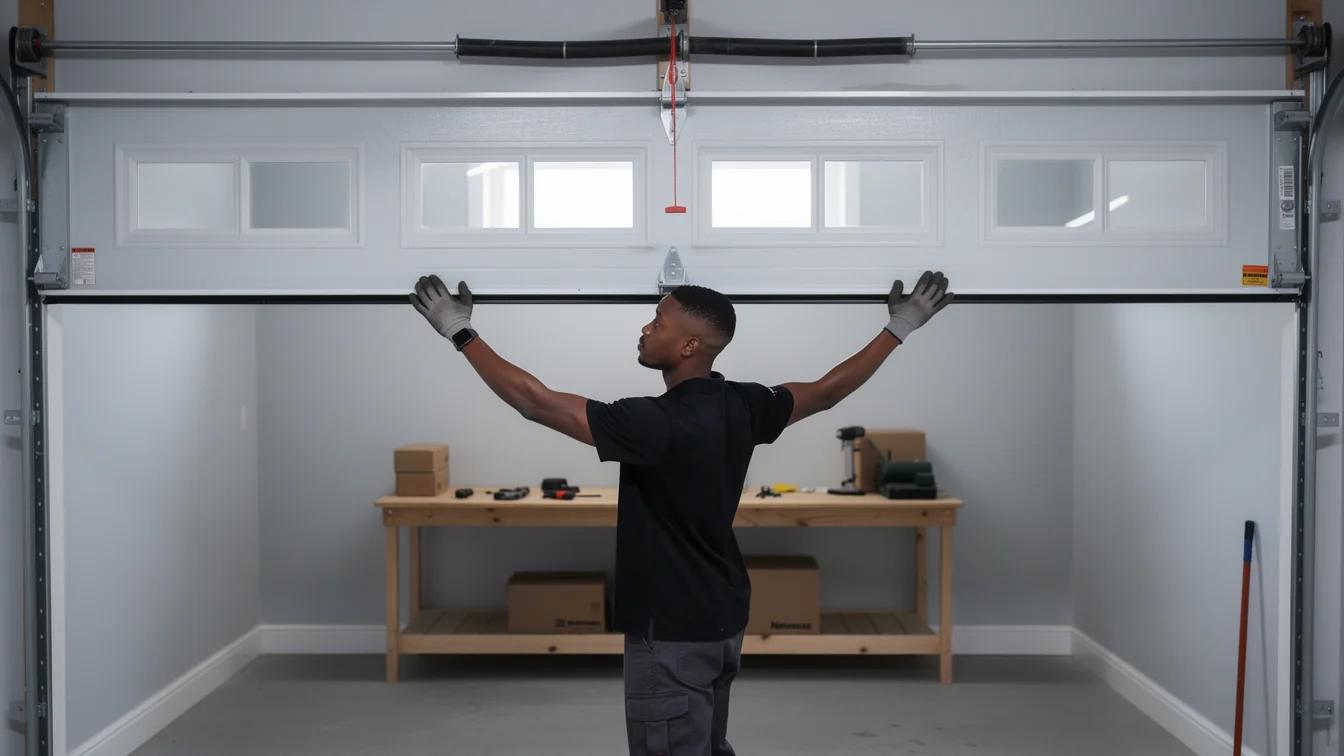
If the door is heavy to lift by hand, slams down the last foot of travel, or the opener strains and reverses, that's a spring losing tension, not a motor problem. Call before you keep running the opener against it. Lakewood's housing stock runs from 1938 up through 2005, with the median build year sitting at 1976, so a lot of doors in this area are original or close to it - meaning original torsion springs rated for a lifespan they've long since used up. A door that's cycled daily since the Carter administration doesn't fail gently; it fails on a cold morning when you're already late. If a cable has jumped the drum or a panel has pulled away from the track, don't force the door at all - that's a same-day call, not a weekend project.
What Local Conditions Do
Lakewood sits in a severe cold climate band, and that matters more for garage doors than people expect. Steel contracts in low temperatures, which tightens tolerances on tracks and rollers that were already worn loose from decades of use. On the 1960s and 70s stock that makes up most of the area's 36 named neighborhoods, from Green Mountain to Eiber to Daniels, the original steel rollers and un-insulated panels do this worse than anything built since. Nylon rollers handle the swing better, and a bottom seal that's cracked or flattened lets cold air sit right against the slab, which is also why openers seem to struggle more in January than July - the grease in an old gear-drive unit just doesn't move the same when it's cold.
What Is Going On
Most service calls in this area trace back to the age of the hardware, not a single dramatic failure. A house built in 1968 with its original torsion spring is carrying forty-plus years of cycles on a part rated for about 10,000 of them, and nobody's counting. Add a household income of $116,667 across the service area and you get a lot of owners who've put money into finishes and landscaping but never looked at the garage door because it still opens - until the spring finally lets go. Across roughly 81,569 owner-occupied houses in the broader service area, the pattern repeats: original hardware, original opener, deferred because it wasn't broken yet. The honest answer is that some of these doors are due for replacement, not another repair - if the track is bent and the panels are rusted through at the bottom, a new spring won't fix the real problem.
Season by Season
Fall is when a technician wants to see the door before the cold sets in - check the weatherstrip, lubricate rollers, and look at a spring that's been fine all summer but won't forgive a sub-freezing morning. Winter is when the calls come in: contracted steel, stiff grease, and springs that snap on the coldest days because the metal has the least give. Spring is panel and track season, since winter moisture works into any gap in a bottom seal and finds the weak point in old wood-frame openings common in the pre-1980 houses here. Summer is the slow season for emergencies but the right time to replace what you've been patching - a new opener or insulated door installed in July won't leave you stuck outside in a January cold snap.
Frequently asked questions
Why does my garage door get harder to open in winter?
Cold steel contracts and tightens tolerances in the track, and grease in an older opener's gear drive thickens up. On a Lakewood house built before the 1980s, that's often paired with a torsion spring that's already near the end of its life, so the two problems show up together on the coldest mornings.
Is it worth repairing an original 1970s door?
Sometimes. If the track is straight and the panels are solid, replacing the spring, rollers, and seal can carry you a long way. If the panels are rusted at the bottom or the track is bent, you're better off replacing the door than paying to patch hardware that's past its working life.
How do I know if it's the spring or the opener?
Disconnect the opener and lift the door by hand. If it's heavy or won't stay up on its own, that's the spring, not the motor. An opener straining against a bad spring will wear out faster and can also be the thing that finally fails first.
Related garage door services in Lakewood
More garage door guides
Book garage door service in Lakewood
Call now or request a quote - tell us what the door is doing and where you are.