
Lakewood, CO · Garage Door Service
Garage Doors on Lakewood's Older Housing Stock
Lakewood homes mostly date to the 1960s-70s, before insulation codes existed. Here's what that means for your garage door in a cold, severe climate band.
- Repairs & new doors
- Springs & openers
- Serving 6 nearby communities
When to Call Someone
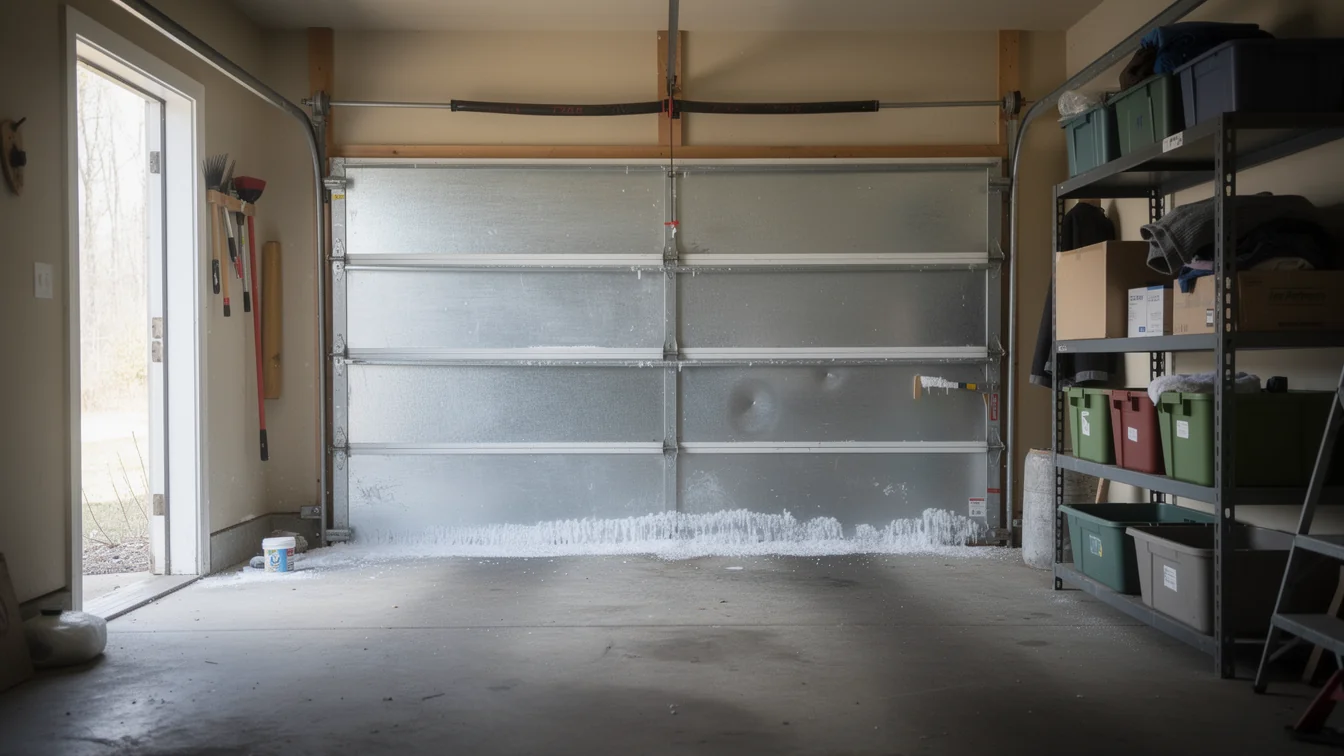
If your door is original to a house built in the Lakewood boom years, it's likely an uninsulated single-layer panel on hardware that predates modern torsion standards. Call when the door feels heavier than it should when lifting by hand, when the opener strains and clicks instead of running smooth, or when you see daylight around the bottom seal on a cold morning. Those are signs the door and the weather aren't getting along, not just a worn part.
Don't wait on a cracked panel through a Front Range winter. A door built before insulation rules existed won't keep a garage above freezing on its own, and a crack lets wind straight through to anything stored against that wall - pipes, a water heater, a freezer. If the opener motor smells hot or trips the breaker repeatedly, that's a call-now problem, not a schedule-for-next-week one.
One honest limitation: if the door is original from the 1960s or 70s and the track is bent or the panels are rusted through, patching it rarely makes sense. At some point the labor to keep an old uninsulated door limping along costs more than replacing it with something built for the current code.
What Local Conditions Do
Lakewood sits in a cold, severe climate band, and that matters more here than in milder parts of the metro because so much of the housing was built before insulation requirements existed. Median construction year across the area is 1976, with stock running from 1938 to as recent as 2005 - but the bulk of neighborhoods, from Green Mountain to Eiber to Daniels, went up in that 1960s-70s window when a garage was treated as unheated storage, not conditioned space.
Cold, severe conditions mean repeated freeze-thaw cycling on steel tracks and torsion springs, and uninsulated doors transmit that cold straight into the garage. Metal contracts in deep cold, which changes spring tension and can make an old door bind in its tracks on the coldest mornings of the year. On a door built before insulation rules, there's no foam core to buffer temperature swings, so the hardware takes the full brunt of it, season after season.
What Is Going On
Across the 36 named areas in this service territory - Belmar Park, Kendrick Lake, Union Square, Carmody, and the rest - the common thread is age. Most of what's standing went up decades before current insulation and weatherproofing codes were written into the building requirements. That's not a flaw specific to one street; it's the character of the housing stock here.
With 81,569 owner-occupied houses across the broader service area and a median household income of $116,667, a lot of owners are sitting on homes worth investing in properly rather than patching repeatedly. An old single-layer door with no thermal break is a known, fixable problem, not a mystery. The fix usually isn't exotic - it's swapping a door built for a different era's expectations for one built for this one's climate.
Season by Season
Winter is the hard season for a cold, severe climate band like this one. Uninsulated doors on 1960s-70s homes let cold radiate into garages built with no expectation of keeping heat in, which is rough on anything stored there and rough on torsion springs that have to work harder in contracted steel. Expect stiffer operation and occasional binding on the coldest stretches.
Spring brings freeze-thaw cycling as temperatures swing, which is when track alignment problems from winter's cold-tightened hardware tend to show up as noise or uneven travel.
Summer is lighter duty for the door itself, though it's a reasonable window to deal with anything winter exposed - rollers, weatherstripping, panel seals - before cold returns.
Fall is the practical time to address a door built before insulation rules existed, ahead of the next cold, severe stretch. Waiting until the first hard freeze to replace a drafty original door means doing the work in worse conditions than doing it now.
Frequently asked questions
Is my garage door original to the house if it was built in the 1960s or 70s?
It's common in this area, since most housing here dates to that window and a lot of original doors were never replaced. If it's a single-layer steel or wood panel with no foam backing, that's a strong sign it predates current insulation requirements and hasn't been upgraded.
Why does my door get harder to lift in winter?
In a cold, severe climate band, steel tracks and torsion springs contract and tighten in deep cold, which changes how the door travels and how much force the spring delivers. An uninsulated door amplifies the effect because there's no thermal buffer between the cold air and the hardware.
Is it worth insulating an old door instead of replacing it?
Depends on the door's condition. If the panels and track are sound, adding insulation can help. If the door is original from the 1960s-70s era with rust or bent track, insulating a door that's otherwise failing doesn't solve the underlying problem - replacement is usually the better spend.
Related garage door services in Lakewood
More garage door guides
Book garage door service in Lakewood
Call now or request a quote - tell us what the door is doing and where you are.