
Lakewood, CO · Garage Door Service
Why Your Lakewood Garage Door Lets the Cold In
Lakewood houses built mostly between 1960 and 1976 fight stubborn weather seals and drafts in our cold winters. Here's what actually causes the gaps and when to call someone.
- Repairs & new doors
- Springs & openers
- Serving 6 nearby communities
When to Call Someone
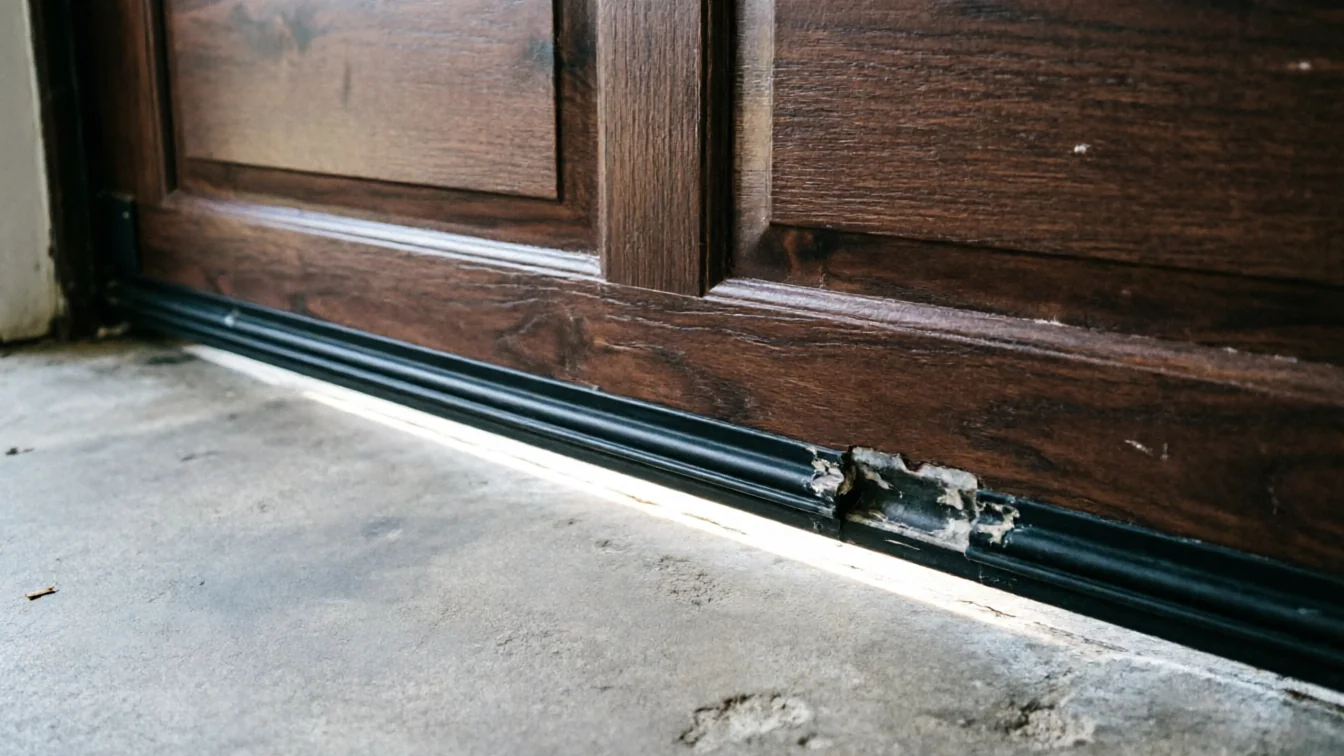
If you can see daylight under the bottom of the door, or feel a steady draft along the sides when the wind picks up, that's not something a can of spray foam fixes for good. Call when the bottom seal has cracked into pieces instead of bending, when the weatherstripping along the vertical tracks has pulled loose from its channel, or when a cold snap leaves a visible gap that wasn't there in October. Most of the houses in this service area were built between 1938 and 2005, with the bulk going up in the 1960s and 70s, so the seal material on a lot of these doors is well past its working life even if it still looks intact from the driveway.
One honest limitation: if the door itself has warped or the track has bent from years of contraction and expansion, a new seal won't solve the draft. At that point you're better off replacing the weatherstripping and the bottom astragal together, or in some cases the whole bottom section. Don't let anyone talk you into a seal-only fix if the track alignment is the real problem - that's a callback waiting to happen.
What Local Conditions Do
This area sits in a COLD severe climate band, which doesn't just mean low numbers on the thermometer. It means the freeze-thaw swing - a hard overnight freeze followed by a 50-degree afternoon, then another freeze - happens over and over through the winter months. That cycle is harder on seals and tracks than steady cold ever would be. Vinyl and rubber weatherstripping contracts in the cold snap, then tries to re-expand as it warms, and after enough cycles it stops snapping back into shape.
Aluminum tracks do the same thing on a smaller scale, and across a build era centered on 1976 (the median year for housing here), most of those tracks have gone through decades of this swing already. The households in this service area - all 188,477 of them, with 81,569 owner-occupied - are sitting on housing stock old enough that the original seal material has usually already failed once, sometimes been patched, and is due again. This isn't a one-time problem; it's a maintenance item tied directly to the climate band we're in.
What Is Going On
Here's the mechanism, plainly: the bottom seal is a vinyl bulb that's supposed to compress against the slab and flex with temperature. In a COLD severe band, repeated freeze cycles make that vinyl brittle. Brittle vinyl doesn't compress - it cracks, flattens, or tears away from the retainer, and once it's gone, cold air and meltwater both get a clear path under the door. The side and top weatherstripping works the same way against the jamb, and on houses from the 1960s-70s stock that makes up most of this area, that stripping is often the thinner, harder style that was standard for the era, not the dual-fin vinyl used now.
There's a second piece: stamped steel or aluminum track brackets shrink slightly in deep cold, which can open a small gap between the door panel and the track seal even when the weatherstripping itself is fine. That's a draft that looks like a seal problem but is actually a track-tension issue, and it needs a different fix - tightening and re-seating the track, not just swapping rubber.
Season by Season
Late fall is when to check seals before the first hard freeze locks a crack in place - press a thumb along the bottom bulb and the side stripping; if it doesn't spring back, replace it now rather than in January. Winter is when the freeze-thaw cycling does its damage, so this is when drafts actually show up and get reported, usually after the first week of real cold.
Spring brings meltwater and runoff, and in a climate band like this, that water finds any gap left by a winter-cracked seal and brings it indoors instead of just letting cold air through. Summer is the slow season for seal failure here, but it's the right time to replace anything that cracked over the winter, since parts lead times are shorter and you're not racing a storm. If you're in Belmar Park, Green Mountain, Union Square, or out toward Applewood and Eiber, the pattern repeats the same way - same build era, same seal material, same cycle.
Frequently asked questions
Why does my garage door only draft in winter?
Because the freeze-thaw swing in our COLD severe climate band is what breaks vinyl seals down, not steady cold. A seal that looked fine in August can crack after a week of overnight freezes and warm afternoons, which is why most draft calls come in January, not July.
Is a new seal enough, or do I need a new door?
Usually a seal and astragal replacement handles it. If the track itself has shifted or the panel has warped, a seal alone won't stop the draft, and we'll tell you that honestly rather than sell you weatherstripping that won't fix the real issue.
My house was built in the 1960s - is that why the seals are bad?
Likely yes. Most homes in this area date from the 1960s and 70s, and the original weatherstripping from that era is thinner and stiffer than what's made today. After decades of freeze-thaw cycling, it's typically due for replacement regardless of how it looks.
Related garage door services in Lakewood
More garage door guides
Book garage door service in Lakewood
Call now or request a quote - tell us what the door is doing and where you are.