
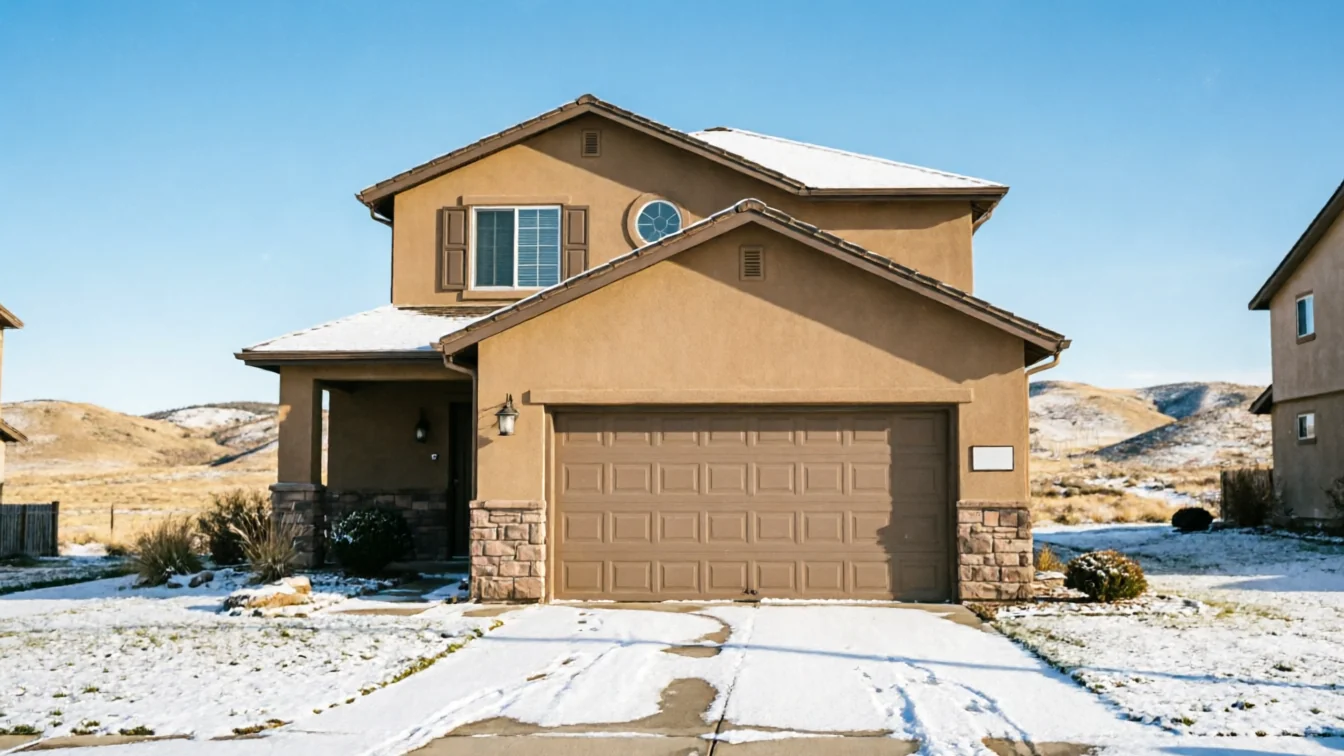
Lakewood, CO · Garage Door Service
When a Spring Goes in Cold Weather in Lakewood
Lakewood sits in a severe cold climate band with housing mostly built 1960s-70s, meaning original torsion springs are failing right when winter cold makes steel brittle.
- Repairs & new doors
- Springs & openers
- Serving 6 nearby communities
When to Call Someone
If you hear a bang from the garage on a cold morning and the door won't budge, that's almost always a torsion spring letting go, not a motor problem. Don't try to lift the door by hand to test it - a broken spring means the full weight of the door is sitting on the opener or on you. Call before you touch the release cord.
A lot of the houses on this side of Lakewood were built in the 1960s and 70s, and a good share of the stock overall goes back to 1938, with the median build year around 1976. That means a lot of doors out there are still running on original torsion hardware that was never sized for the door weight codes assume today. When that hardware is 40-plus years old and the temperature drops hard, the spring steel has already lost flexibility from decades of cycling - cold just finishes the job.
One thing I won't do is tell you a 50-year-old spring is fine because it's "still holding." If it's original to a house built before the mid-70s, it's on borrowed time regardless of how it looks. Replacing both springs on a double door when one goes is the honest call - mismatched spring age is its own failure waiting to happen.
What Local Conditions Do
Lakewood sits in a climate band rated cold-severe, and that matters more for garage doors than people expect. Steel contracts as temperature drops, and a torsion spring that's already fatigued from years of daily cycling loses whatever give it had left right when it's coldest outside. That's why spring failures cluster on the first hard cold mornings rather than spreading evenly across the year.
It isn't just the spring. Nylon rollers crack in the cold and get noisy before they fail outright. Lubricant that was fine in September turns thick in January and makes the opener strain to pull a door that's suddenly harder to move. None of this is exotic - it's what severe cold does to moving steel and plastic parts that sit in an unheated garage all winter.
The honest limitation here: I can't tell you a door won't break this winter just because it didn't last winter. Cold exposure is cumulative. A spring that survived five cold snaps can still go on the sixth, especially if it's already past the age where it should've been swapped. Watching for slow, jerky travel or a door that sags unevenly before the snap gives you a window to call ahead of a full failure.
What Is Going On
Lakewood's housing runs from 1938 up through 2005, with most of it clustered in that 1960s-70s band and a median build year of 1976. That matters because doors and openers from that era weren't built to current door-weight standards, and in a lot of these houses the original torsion spring and track hardware is still in place, just aging.
Across the 36 named areas that make up this part of the metro - places like Green Mountain, Union Square, Foothills, Eiber, and out toward Applewood and Wheat Ridge - the pattern repeats: older one and two-car garages with side-mounted torsion springs sized for lighter doors than what's sometimes been swapped in over the years. A heavier insulated replacement door on an old spring is a mismatch that shows up as a shorter spring life, not immediately but over a few winters.
What I can't tell you is the exact year your specific spring was installed without looking at it - stamped dates wear off, and plenty of these have been serviced once already by someone else. What I can say is that if your garage was built or your door was last replaced anywhere near that 1976 median, the spring under it has outlived what torsion springs are rated for, cold winters or not.
Season by Season
Fall is when I'd rather see you than January. A door that's starting to groan or lag before the cold really sets in still has a spring with some life in it - replacing it in October or November means doing the job on your schedule, not during a cold-morning emergency.
Winter is when the severe-cold rating on this area actually bites. Steel that's been cycling for decades loses its last bit of flex once temperatures drop hard, and that's when springs that were marginal in fall go all the way. This is also when nylon rollers crack and lubricant thickens enough that the opener motor works harder than it should, which shortens the motor's life too, not just the spring's.
Spring and early summer are the forgiving months - less stress on the hardware, and a decent window to get an aging torsion spring swapped before the next cold season instead of after it fails. If your garage sits unheated, which most of these older Lakewood builds do, the swing between a 70-degree summer afternoon and a hard winter morning is exactly the kind of repeated stress that wears spring steel down faster than age alone would.
Frequently asked questions
Why did my spring break on the coldest morning of the year?
Cold doesn't cause the break by itself - it finishes off a spring that's already fatigued from years of cycling. Steel loses flexibility as it ages, and severe cold removes whatever give was left. That's why failures cluster on the first hard cold mornings of the season rather than spreading out evenly.
My house was built in the 1960s - is the spring original?
It's possible. A lot of the housing stock in this part of Lakewood dates to the 1960s and 70s, with a median build year around 1976, and plenty of those garages still have original torsion hardware. I'd need to look at the spring itself to confirm, but age alone is reason enough to have it checked.
Can I just replace one spring on my double door?
You can, but I don't recommend it if the other one is close to the same age. Mismatched spring age means uneven tension and a second failure down the road, often within months. Replacing both at once costs less overall than two separate service calls.
Does an unheated garage make springs wear out faster?
Yes. The swing between a warm afternoon and a hard freeze overnight is repeated stress on spring steel, and most older garages in this area aren't heated. That temperature swing, cycle after cycle, wears the spring down faster than age by itself would.
Related garage door services in Lakewood
More garage door guides
Book garage door service in Lakewood
Call now or request a quote - tell us what the door is doing and where you are.