
Lakewood, CO · Garage Door Service
Is Your Older Lakewood Garage Door Worth Fixing
Lakewood's housing stock runs 1938-2005, median 1976. Here's how to tell if your older garage door is worth repairing or replacing given our cold climate.
- Repairs & new doors
- Springs & openers
- Serving 6 nearby communities
When to Call Someone
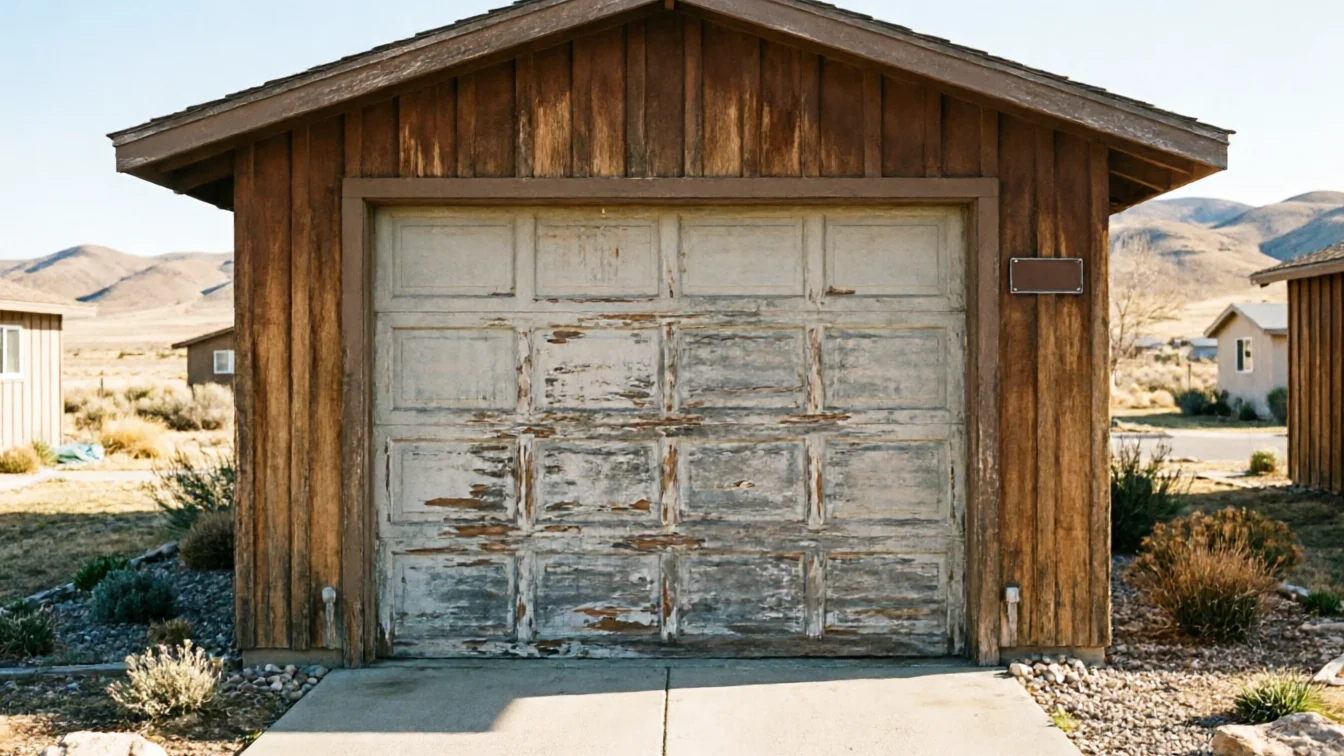
If your door is sagging, dragging on one track, or the opener strains and reverses halfway up, that's worth a call before it's worth a new door. A lot of the housing stock in this service area went up between 1938 and 2005, with the median build year sitting at 1976, so a big share of doors still in service are original or close to it. An original door from that era isn't automatically junk. Steel sectional doors from the 1960s and '70s were built heavier than a lot of what gets sold today, and the track and spring setup, while dated, can usually be rebuilt rather than torn out. Call when a cable is frayed, when the bottom panel has rusted through at the corners, or when the door won't stay up on its own - that last one almost always means a worn torsion spring, not a dying door. Don't call for a squeak. Lubricate the rollers and hinges first. We'd rather tell you to grease a hinge than send a truck for a five-minute fix. The honest limit here: if the door's wood has delaminated or the steel skin has rusted through in more than one panel, no amount of adjustment saves it, and that's a replacement conversation, not a repair one.
What Local Conditions Do
Lakewood sits in a climate band rated cold and severe, and that's the thing that actually wears out an older door, more than age by itself. Steel contracts hard in a deep cold snap, and a torsion spring that's already lost some tension from decades of cycling can snap on a cold morning instead of just going slack. Weatherstripping on a door from the 1970s build era was never designed for the kind of temperature swings this area gets, so gaps at the bottom seal and between panels let cold air and moisture straight into the garage. That moisture is what rusts out hinges and hardware from the inside, well before the panel steel itself looks bad. On a door that's otherwise sound - square, tracking straight, panels intact - most of what's failing is hardware that reacts badly to cold cycling: springs, cables, and rollers. Those are rebuildable. What isn't rebuildable is a door that's already racked out of square from years of an unbalanced spring working against gravity in freezing temperatures. That kind of door has usually been straining the opener and the track for longer than the owner realizes.
What Is Going On
Across the neighborhoods close in - Belmar Park, Kendrick Lake, Foothills, Union Square, Green Mountain, Creighton, Carmody, Daniels, Eiber, and the stretch of Applewood just north - you've got housing stock mostly from the 1960s and '70s, which lines up with the broader median build year of 1976 for the area. That means a lot of these doors run on torsion springs and track hardware sized for a lighter door than what gets installed new today, and on steel gauges that aren't standard stock anymore. When one of those springs fails, replacing it with a modern equivalent spring usually means recalculating the wind rating for the door's weight, not just swapping in the closest size on the shelf. That's a job worth doing right, because a mismatched spring puts the whole door out of balance again within a year. What's actually going on with most service calls in these older tracts isn't the door failing structurally - it's the spring, cable, or roller hardware reaching the end of a lifespan that cold-climate cycling shortens. The panel steel from that era tends to outlast the hardware holding it up.
Season by Season
Early spring is when a lot of these older doors show their hand - after a winter of cold cycling, a spring that was on its last turns finally lets go, usually on the first 50-degree day when everyone's opening the garage more. That's the busiest season for spring calls on 1960s and '70s stock. Summer is light on emergencies but it's the right time to get a door rebalanced before the next cold season puts more stress on it. Fall is for weatherstripping and hardware checks - tightening hinges, checking cable wear - ahead of winter, since once the severe cold band sets in, parts that are marginal tend to fail outright rather than just get noisy. Winter itself is when a borderline spring or a corroded cable actually breaks, usually on the coldest stretch of the season, because cold steel has less give. If your door is original to a house built anywhere near that 1976 median, plan the hardware check for fall, not for whenever it finally fails - a failed spring in January on a door that's otherwise sound is still a repair, but it's a colder, less convenient one.
Frequently asked questions
How do I know if my garage door is original to the house?
If your house was built in the 1960s or '70s - common across a lot of this area given the median build year of 1976 - check the door's steel gauge and spring mount style. Older torsion setups are side-mounted and use a thinner steel than what's sold now. If nobody's replaced the door, it's almost certainly original hardware even if the panel looks fine.
Is it cheaper to fix an old spring or replace the whole door?
Rebuilding a torsion spring on a structurally sound door is almost always cheaper than replacing the door. Replacement only makes sense once the panels are rusted through, the door is racked out of square, or the track has been bent from years of running unbalanced. We'll tell you straight which one you're looking at.
Why does my old door act up more in winter?
This area sits in a severe cold climate band, and cold steel contracts and loses give. A spring or cable that's marginal will often hold through a mild fall and then fail on the first hard freeze. It's not the cold causing new damage - it's the cold exposing wear that was already there.
Should I just replace a door that's original to the house?
Not automatically. A lot of steel sectional doors built across this area's 1960s-70s housing boom are heavier-gauge than current stock and still track straight. If the panels are intact and the door isn't racked, rebuilding the spring and hardware usually gets more years out of it than people expect.
Related garage door services in Lakewood
More garage door guides
Book garage door service in Lakewood
Call now or request a quote - tell us what the door is doing and where you are.